
Do You Need a Whole House Water Filter?
If you've ever noticed a chlorine smell from your tap water, found sediment in your kettle, or wondered what's actually coming out of your rainwater tank, you've probably thought about a whole house water filter. But with systems ranging from a few hundred dollars to several thousand, it's worth understanding what they do, when they're genuinely necessary, and which type suits your situation before making a decision.
This guide covers the basics of whole house filtration, how mains and rainwater supplies differ, and what to look for when choosing a system.
What Is a Whole House Water Filter?
A whole house water filter — also called a point-of-entry filter — connects to your property's main water supply line, treating all the water that enters the home before it reaches any tap, shower, appliance, or hot water system.
This is the key difference between a whole house system and an undersink or benchtop filter. Those point-of-use filters only treat water at one outlet — usually the kitchen tap. A whole house system treats every outlet in the property: bathroom taps, shower water, laundry cold fill, the water that fills your washing machine and dishwasher, and the water feeding your hot water system.
For homeowners concerned about water quality throughout the entire property — not just the drinking water — a whole house system is the more comprehensive solution.
What Does a Whole House Filter Actually Remove?
The answer depends on the type of system and the cartridges fitted, but whole house filters are generally designed to address one or more of the following:
Sediment — fine particles of sand, rust, dirt, and scale that can enter the supply from ageing pipes, tank catchments, or fluctuations in mains pressure. Sediment can cause wear on appliances, water heaters, and tap fittings over time.
Chlorine and chloramines — used by water authorities to disinfect mains supply, chlorine can affect the taste and smell of drinking water and may cause skin irritation in sensitive individuals, particularly during showering. A carbon-based filter stage removes chlorine effectively.
Organic compounds and tannins — naturally occurring organic matter that can give water a yellow or brown tint and earthy taste, common in rainwater tank supply and some regional mains supplies.
Bacteria, viruses, and protozoa — microorganisms that can be present in untreated water sources. Standard sediment and carbon filters do not remove microbial contamination — this requires ultraviolet (UV) disinfection, which inactivates microorganisms by disrupting their DNA without adding chemicals to the water.
Mains Water: Do You Still Need a Filter?
Australian mains water is treated by local water authorities and is generally safe to drink straight from the tap. So why would a mains-connected homeowner consider a whole house filter?
The most common reasons are taste, odour, and appliance protection. Chlorine — while effective as a disinfectant — can make tap water taste flat or chemical, particularly in areas where higher doses are used. Sediment, while not a health risk in small quantities, can accumulate in hot water systems, reduce the lifespan of tap washers and cartridges, and leave residue in appliances over time.
A single or dual stage mains filter addresses these concerns without overcorrecting. For homeowners who want an additional layer of protection — particularly in areas where the mains supply quality is variable, or where older property pipework may be introducing rust or particulates — a dual or triple stage system with UV disinfection provides more comprehensive treatment.
The honest answer is that many mains-connected households will get by perfectly well without a whole house filter. But for households with young children, elderly residents, or anyone with sensitivities to chlorine or poor-tasting water, the quality-of-life improvement is often worth the investment.
Rainwater Tank Supply: When a Filter Becomes Essential
The situation is different for properties on rainwater tank supply. Rainwater collected from roof catchments is untreated — it hasn't passed through any disinfection process before entering your tank. While rainwater can be surprisingly clean from a well-maintained catchment, it's also capable of containing:
- Sediment and debris from roofs and gutters
- Bird and animal faecal matter
- Organic matter including leaves and plant material
- Bacteria such as E. coli and Campylobacter
- Protozoa such as Cryptosporidium and Giardia
Sediment and organic matter alone can be addressed with a multi-stage filtration system. But microbial contamination requires UV disinfection — and for any property relying on rainwater as a primary supply for drinking, cooking, and bathing, UV is not optional.
A properly specified rainwater filtration system — dual or triple stage filtration followed by a UV stage — will deliver water that is safe for all household uses and clear of the sediment and organic compounds that affect taste and appliance life.
Rain and Mains Properties: A Common Australian Scenario
Many Australian properties — particularly in peri-urban and regional areas — have both a rainwater tank and a mains water connection, with an automatic switchover that draws from the tank when water is available and falls back to mains when the tank is low.
This is a great setup for water conservation, but it creates a water quality challenge: the quality of the incoming water varies depending on which source is active. A mains-only filter won't adequately treat rainwater when the system switches over, and a rainwater-only system may be over-specified for periods when mains supply is running.
The Puretec EM series is specifically designed for this scenario — a dual stage filtration system that handles variable water quality from both rain and mains sources. For properties where the rainwater supply carries any microbiological risk, the Puretec Hybrid E series adds UV disinfection to the rain and mains setup.
Single, Dual, or Triple Stage: How Many Stages Do You Need?
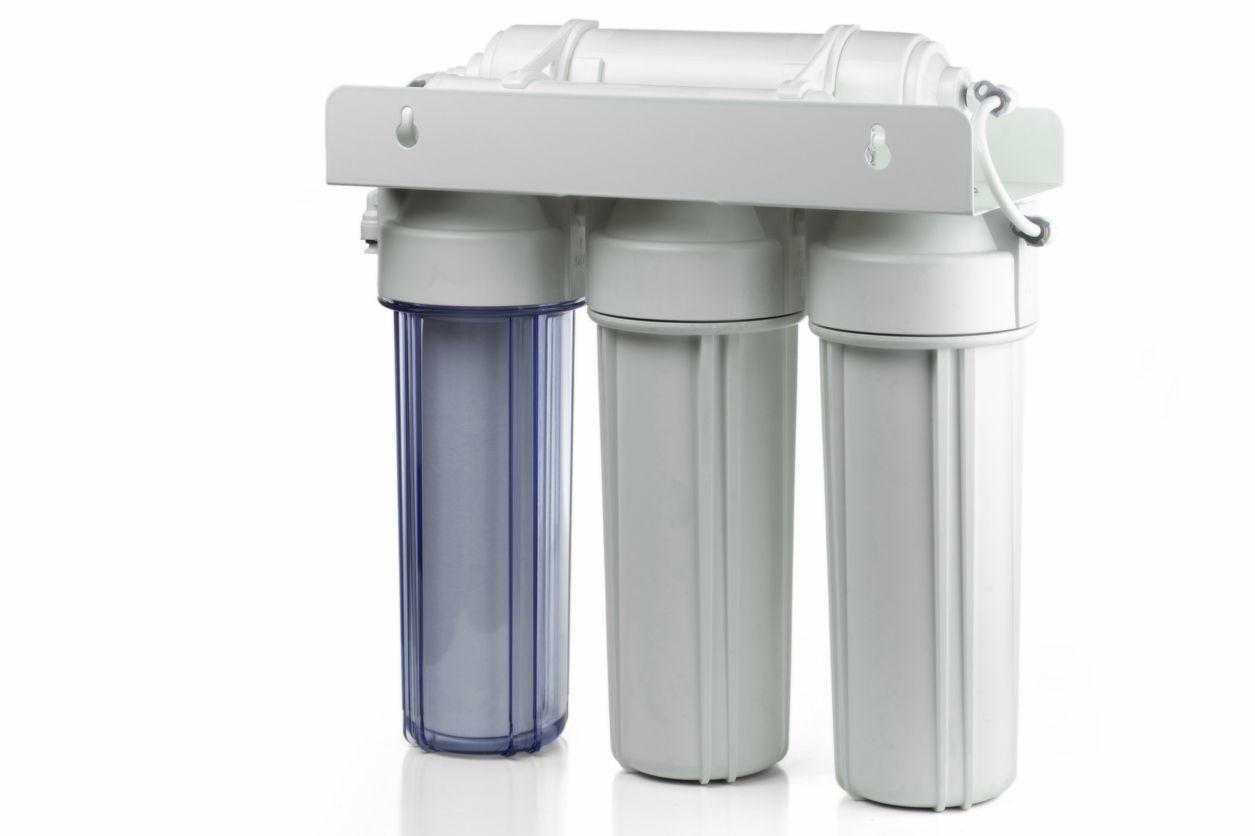
Filtration stages refer to the number of filter housings in the system, each containing a cartridge that addresses different contaminants.
Single stage systems provide basic sediment and particulate removal. They suit smaller households on mains supply where water quality is already good and the primary concern is protecting appliances from scale and sediment.
Dual stage systems add a second filter — typically a carbon block — for more comprehensive treatment of chlorine, taste, odour, and finer particulates. This is the most common choice for residential whole house filtration and suits the majority of Australian homes on either mains or rainwater supply.
Triple stage systems provide the highest level of filtration before any UV treatment stage. They suit larger households, properties with higher sediment loads, or applications where water quality is more variable. In UV-equipped systems, triple stage filtration maximises the clarity of the water before it passes through the UV lamp — which improves UV effectiveness, as turbid water reduces UV penetration.
10" vs 20" Systems: Does Size Matter?
Whole house filter systems come in 10" and 20" housing sizes, which affects both flow rate and cartridge life.
A 10" system suits smaller homes with lower peak demand — typically one or two bathrooms. A 20" system delivers higher flow rates and longer cartridge life between replacements, making it better suited to larger households or any property where maintaining strong pressure at multiple simultaneous outlets is important.
For most Australian family homes with two or more bathrooms, a 20" system is the recommended starting point. The higher upfront cost is offset by less frequent cartridge replacement and better performance under peak demand.
What About UV Disinfection?
UV filtration is worth addressing separately because it's often misunderstood. A UV system does not filter the water — it disinfects it. UV light at the correct wavelength inactivates bacteria, viruses, and protozoa by disrupting their ability to reproduce, rendering them harmless without adding any chemicals.
This is important for two reasons. First, UV only works on clear water — sediment and turbidity in the water can shield microorganisms from UV exposure. This is why UV systems always include sediment filtration stages before the UV lamp. Second, UV does not remove sediment, chlorine, or organic compounds — those are handled by the filter stages.
For rainwater tank installations, a combined filtration and UV system is the recommended approach. For mains-connected properties on clean, treated supply, UV is an optional enhancement rather than a necessity.
How to Choose the Right Whole House Water Filter
To narrow down the right system, work through these four questions:
1. What is your water source? Mains only, rainwater only, or a combined rain and mains setup? This determines whether you need a mains system (WH series), a rain and mains system (EM series), or a UV-equipped system (Hybrid R or Hybrid E series).
2. Is microbiological safety a concern? If you're on rainwater or have any doubt about microbial contamination, choose a system with UV disinfection.
3. How large is your household? More people and more bathrooms means higher peak demand — opt for a 20" system and consider dual or triple stage filtration.
4. What are your primary water quality concerns? Taste and chlorine reduction needs a carbon stage. Sediment protection needs a sediment pre-filter. Both are addressed by dual stage systems.
Shop Whole House Water Filters at PlumbingSales.com.au
PlumbingSales.com.au stocks the complete Puretec whole house water filtration range — from entry-level single stage mains filters through to triple stage rainwater UV systems — with free shipping on all systems Australia-wide. Puretec is Australia's leading residential water filtration brand, and our team has the expertise to help you select the right system for your water source and household size.
Browse the full whole house water filters range online, or explore our complete filters and water treatment category for the full range of Puretec products.
Need help choosing? Call our knowledgeable team on 1800 341 972 or email [email protected] — we're happy to guide you through the options.